Calcium is vital for muscle contraction in the skeletal muscles, the heart’s blood-pumping action and maintenance of healthy blood pressure. The mineral is also involved in nerve impulse transmission and blood clotting, as well as tooth formation and maintenance.
If you think you’re meeting your calcium requirements strictly through diet, consider this. If you’re lactose intolerant, vegan or avoiding dairy products for other reasons, realize that plant-based foods provide much lower amounts of calcium per serving than a glass of cow’s milk. So you’re not alone if you’re not meeting the recommended adult intake of 1200 milligrams of calcium per day.
Fortunately, there’s an easier way to fulfill your daily calcium requirements. Pure Lab Vitamins Calcium Hydroxyapatite contains more than just calcium. It’s an organically-bound complex of what’s naturally part of the bone matrix: bone growth factors, proteins, calcium, phosphorus, and trace minerals. Together, these are needed for the maintenance of healthy bones, teeth and systemic cellular functions.
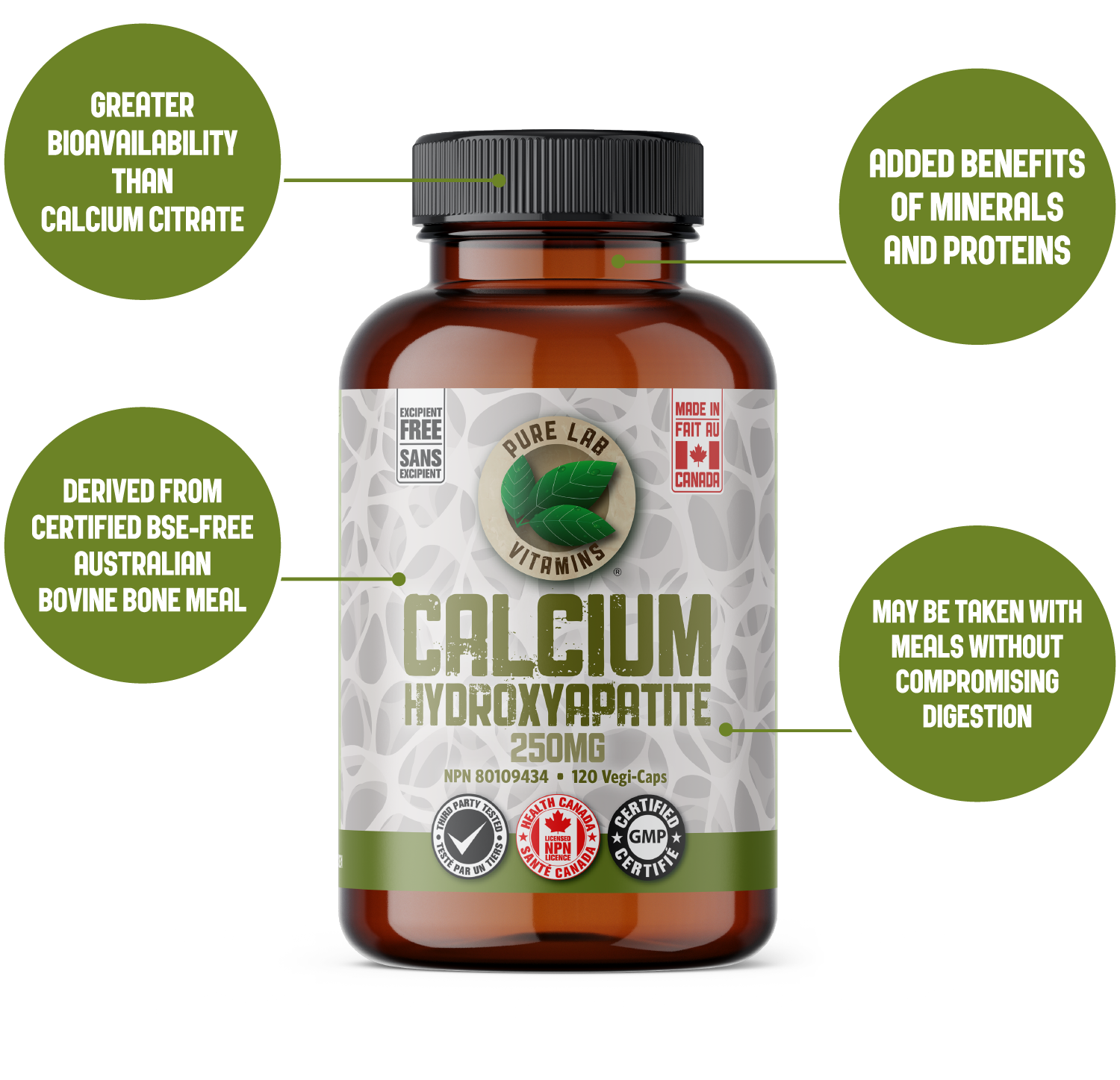
With its superior bioavailability over calcium carbonate, calcium citrate and other popular calcium compounds, calcium hydroxyapatite supports the bone mineral matrix in its entirety. It has greater bioavailability than calcium citrate and calcium carbonate, with more of each dose absorbed into circulation.
Pure Lab Calcium Hydroxyapatite contains only high-grade, certified BSE-free Australian bovine bone meal as its source material. Each capsule contains 250 milligrams of pure elemental calcium.
Some calcium products have so little calcium per capsule that more than 6 capsules must be taken daily to achieve the desired benefits. With Pure Lab Vitamins Calcium Hydroxyapatite, the Recommended Daily Intake (RDI) of calcium can be obtained with just 1-2 capsules 2 -3 times daily with food.
If you consume milk products or calcium-fortified non-dairy milk substitutes, you may require fewer capsules to achieve your daily requirements (or as advised by a health care practitioner). Be sure to consider your dietary intake of calcium when determining your individual dosing of calcium supplements.
Adegboye AR, Christensen LB, Holm-Pedersen P, Avlund K, Boucher BJ, Heitmann BL. Intakes of calcium, vitamin D, and dairy servings and dental plaque in older Danish adults. Nutr J. 2013;12:61.
Antonenko O, Bryk G, Brito G, Pellegrini G, Zeni SN. Oral health in young women having a low calcium and vitamin D nutritional status. Clin Oral Investig. 2015 Jul;19(6):1199-206.
Bhadada SK, Rao SD. Role of Phosphate in Biomineralization. Calcif Tissue Int. 2021;108(1):32-40.
C. Castelo-Branco, M. J. Cancelo Hidalgo, S. Palacios, M. Ciria-Recasens, A. Fernández-Pareja, C. Carbonell-Abella, J. Manasanch & J. Haya-Palazuelos. Efficacy and safety of ossein-hydroxyapatite complex versus calcium carbonate to prevent bone loss. Climacteric 2020 Jun: 23:3, 252-258.
North American Menopause Society. The role of calcium in peri- and postmenopausal women: consensus opinion of The North American Menopause Society. Menopause. 2001 Summer;8(2):84-95.
Office of Dietary Supplements. National Institutes of Health. “Calcium: Fact Sheet for Health Professionals”. Accessed online Sept. 2, 2021.
Omotayo MO, Dickin KL, O'Brien KO, Neufeld LM, De Regil LM, Stoltzfus RJ. Calcium Supplementation to Prevent Preeclampsia: Translating Guidelines into Practice in Low-Income Countries. Adv Nutr. 2016;7(2):275-278.
Orimo H. The mechanism of mineralization and the role of alkaline phosphatase in health and disease. J Nippon Med Sch. 2010;77(1):4-12.
Stringer JD. Calcium Supplementation for Preventing Hypertensive Disorders in Pregnancy.Am Fam Physician. 2015 Oct 1;92(7):570-571.
Sunyecz JA. The use of calcium and vitamin D in the management of osteoporosis.Ther Clin Risk Manag. 2008;4(4):827-836.
What is ‘hydroxyapatite’?
Answer: Hydroxyapatite is bone meal. Bone meal is made up of organically bound calcium complex that naturally contains calcium, phosphorus, and trace minerals, plus bone growth proteins important to bone density and strength. It is biocompatible, meaning it integrates well with living tissue.
What is Pure Lab’s Calcium Hydroxyapatite sourced from?
Answer: Pure Lab’s Calcium Hydroxyapatite is sourced from high-grade, BSE-free Australian bovine (cow) bone meal.
What does ‘BSE-free” mean and why is this important?
Answer: BSE (bovine spongiform encephalopathy) is a fatal brain disease that occurs in cattle that may contaminate other parts of the animal during slaughter. Since BSE is transmissible to humans who consume these infected tissues, Pure Lab ensures our source material for our Calcium Hydroxyapatite is guaranteed BSE-free.
What is the recommended use for Pure Lab’s Calcium Hydroxyapatite?
Answer: The recommended use for Pure Lab’s Calcium Hydroxyapatite is to help the maintenance of bones and teeth.
How much elemental calcium is in each capsule of Pure Lab’s Calcium Hydroxyapatite?
Answer: Each capsule of Pure Lab’s Calcium Hydroxyapatite contains 250 milligrams of elemental calcium.
Why is there phosphorus in Pure Lab’s Calcium Hydroxyapatite?
Answer: Phosphorus is one of the most abundant, naturally occurring minerals found in strong bones. The manufacturing process for Pure Lab’s Calcium Hydroxyapatite maintains the full range of minerals found in bone, including phosphorus.
Are there any side effects to be expected while using Pure Lab’s Calcium Hydroxyapatite?
Answer: Digestive problems can reduce the absorption of any nutritional supplement. Pure Lab’s Calcium Hydroxyapatite is a complex of minerals and proteins, which tends to be easier on the stomach than calcium sourced from rock. Individuals concerned about indigestion may take Pure Lab’s Calcium Hydroxyapatite several times daily, no more than 1 capsule at a time.
Is there anyone who shouldn’t use Pure Lab’s Calcium Hydroxyapatite?
Answer: Vegetarians and vegans should avoid using Pure Lab’s Calcium Hydroxyapatite because it is not vegan. Individuals with calcium oxalate-based kidney stones should consult with their nephrologist before using Pure Lab’s Calcium Hydroxyapatite.
Is Pure Lab Vitamins a Canadian company?
Answer: Yes, Pure Lab Vitamins is proudly owned and operated. Our products are made in Canada.
Where is Pure Lab’s Calcium Hydroxyapatite manufactured?
Answer: Pure Lab’s Calcium Hydroxyapatite is manufactured in Canada using high-quality domestic and imported ingredients.
Is Pure Lab’s Calcium Hydroxyapatite made in a GMP-certified facility?
Answer: Yes, Pure Lab’s Calcium Hydroxyapatite is made in a GMP-certified facility.
Is Pure Lab’s Calcium Hydroxyapatite third-party tested?
Answer: Yes, Pure Lab’s Calcium Hydroxyapatite is third-party tested. Our raw materials and finished goods are always tested by ISO-certified labs.


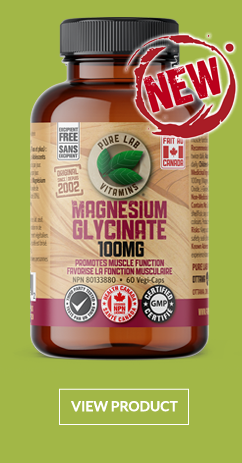
 Magnesium Glycinate 100 mg
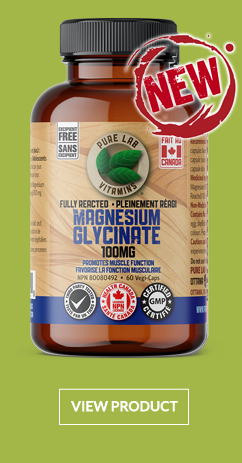
 Magnesium Glycinate Fully Reacted 100 mg
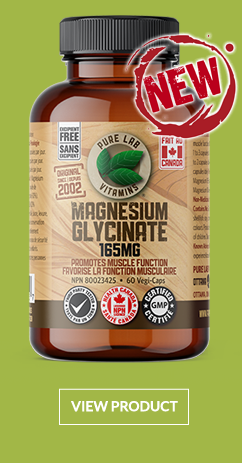
 Magnesium Glycinate 165 mg
 Magnesium Glycinate Raspberry-Lemon Powder Mix
 Magnesium Glycinate + L-Theanine
 Magnesium Glycinate +Taurine +CoQ10
 Carbonyl Iron 22.5 MG
 Zinc Glycinate 23 MG
 Copper Glycinate 1 MG
 Selenomethionine 200 MCG
 Calcium Hydroxyapatite
 Bioactive B Complex
 Bioactive Folic Acid 1 MG
 Bioactive B6 (PYRIDOXAL-5-PHOSPHATE) 50 MG
 Bioactive B12 1000 MCG
 Bioactive B12 5000 MCG
 NADH SR 20 MG
 NADH + Ubiquinol
 Vitamin K2-MK7 120 MCG
 NAC 600 MG
 L-THEANINE 250 MG
 L-THEANINE SLOW RELEASE 200 MG
 L-THEANINE CHEWABLES 125 MG
 L-Glutamine Capsules
 L-Glutamine Powder
 Magnesium Butyrate
 DIM
DIM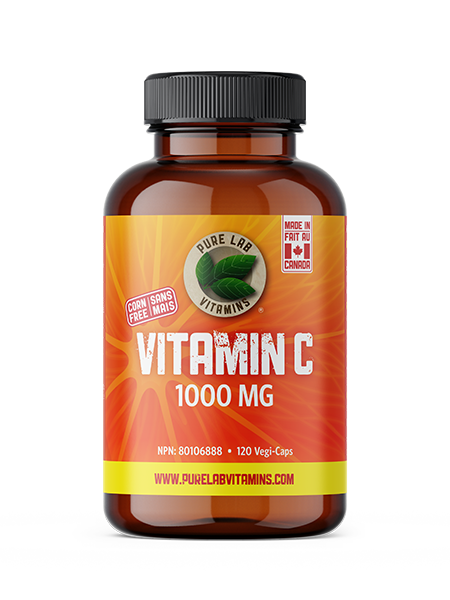 Vitamin C 1000 MG
 Vitamin C Slow Release 1000MG
 Vitamin C Powder
 Vitamin D3 1000IU
 Vitamin D3 2500IU
 Vegan Vitamin D3 1000IU
 Vegan Vitamin D3 2500IU
 Slow Release Melatonin 10 MG
.png) Magnesium Glycinate +Melatonin
Magnesium Glycinate +Melatonin AlkaPure pH
 ThyroPure
 AdaptaPure
 Rhodiola
 UTI Pure 120s
 UTI Pure Powder


 WHAT'S HAPPENING AT PLV


